Key Takeaways
A suitable used differential can restore smooth, dependable driveline operation, but only when it matches the vehicle precisely. Careful identification and inspection are worth more than choosing the cheapest assembly.
- Confirm the CR-V generation, drivetrain, transmission, VIN, and factory part number before buying.
- Inspect the housing, gears, bearings, seals, and mounting points for signs of damage or wear.
- Ask whether the used differential was tested, how it was removed, and what guarantee applies.
- Compare the purchase price with fitting, fluid, freight, and possible repair costs.
- Have the replacement installed by a qualified technician using the correct fluid and procedures.
Understanding Honda CR-V differentials and their role
A differential is a major driveline component, not simply another gearbox housing. It helps deliver engine power to the driven wheels while allowing those wheels to rotate at different speeds through a turn. That difference in speed is essential for predictable handling and reduced tyre scrub. Understanding its job makes it easier to recognise a genuine fault and select a suitable replacement.
What a differential does in a Honda CR-V
The differential transfers torque through the final drive and permits the wheels on the same axle to turn at different rates. During a corner, the outside wheel travels farther than the inside wheel, so both cannot rotate at exactly the same speed. Internal gears accommodate that difference while keeping power moving through the driveline. A smooth power transfer depends on sound gears, bearings, lubrication, and mounting points.
Front, rear, and all-wheel-drive differential differences
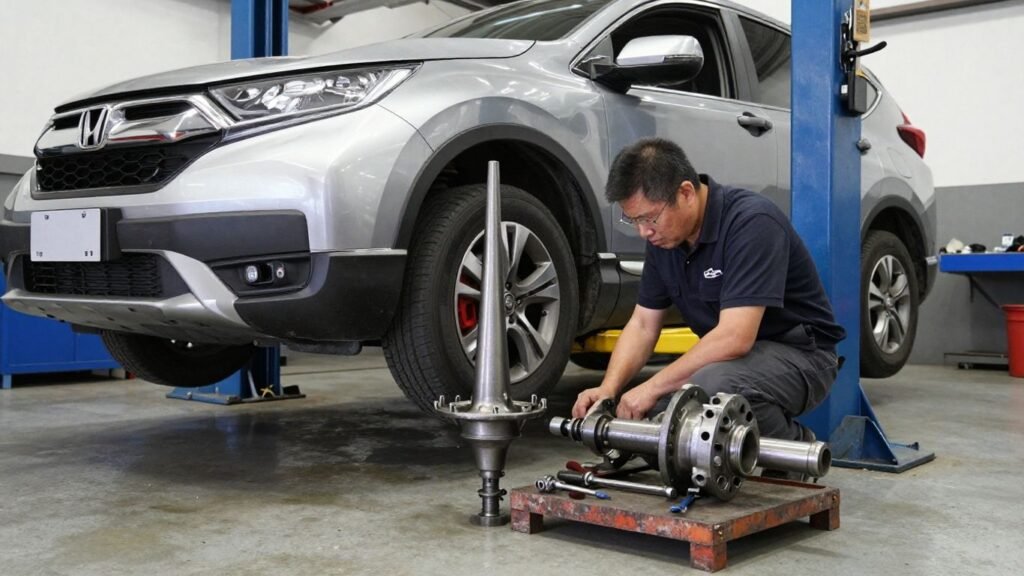
Front-wheel-drive CR-V models generally combine the final drive and differential within the transaxle, while an all-wheel-drive model has additional driveline components and a rear differential assembly. The location, casing, mounting arrangement, gear ratio, and connection points can vary between versions. A rear unit from an all-wheel-drive vehicle is not automatically suitable for another CR-V simply because the body shape looks similar. Always identify the complete drivetrain before comparing parts.
Signs of differential wear or failure
Whining, humming, clunking, vibration, or a change in noise while accelerating or coasting can point to differential or related driveline wear. Oil seepage around seals may reduce lubrication over time, while metallic particles in drained fluid can suggest internal damage. These symptoms can also come from wheel bearings, driveshafts, tyres, or transmission components. A technician should diagnose the source rather than assuming the differential is at fault.
Why the correct differential matters for driveline performance
A differential with the wrong ratio, housing, or mounting arrangement can create noise, poor fitment, or excessive stress elsewhere in the driveline. On an all-wheel-drive CR-V, mismatched components may also affect how torque is shared between axles. The right assembly must suit the vehicle’s original specification and the condition of its associated shafts and mounts. Matching by appearance alone is a risky shortcut.
Identifying the right differential for your CR-V
Correct identification should happen before a seller quotes a price or prepares an assembly for collection. Model year, generation, drivetrain, transmission, and factory coding can all affect compatibility. Registration details may provide a useful starting point, but they are not a substitute for the vehicle identification number. Take clear photographs of the existing component if the identification is uncertain.
Matching the model year and generation
CR-V generations can share a familiar body profile while using different driveline parts. Facelift changes, engine options, and market specifications may also alter the differential or its attached components. Check the build date and model designation rather than relying only on the year the vehicle was first registered. A reputable supplier should be willing to confirm the donor vehicle details before accepting an order.
Checking the drivetrain and transmission type
Start by confirming whether the vehicle is front-wheel drive or all-wheel drive, then verify the transmission type and engine specification. The differential may be integrated into a transmission assembly or supplied as a separate unit, depending on the vehicle configuration. This distinction affects both the part selected and the installation process. A part that fits physically may still have an unsuitable ratio or connection arrangement.
Using the VIN and factory part number
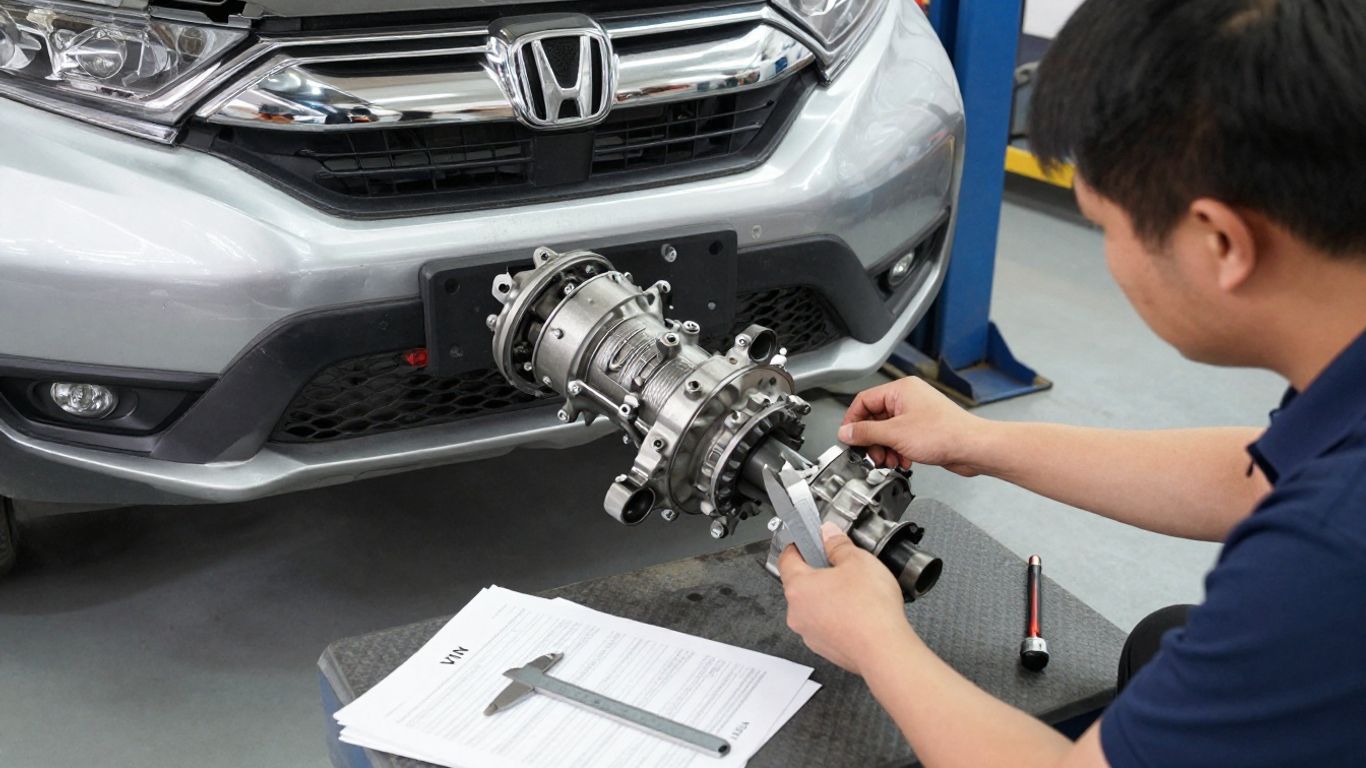
The VIN gives a supplier a more reliable basis for checking the vehicle’s build specification. If the original unit can be accessed, record every legible label, casting mark, and factory part number before removal. These details can be compared with the donor assembly and its paperwork. The following checks help keep the identification process orderly:
| Identification point | What to confirm | Why it matters |
|---|---|---|
| VIN | Full vehicle identification number | Links the part search to the exact vehicle |
| Build information | Model year and generation | Separates visually similar variants |
| Drivetrain | Front-wheel drive or all-wheel drive | Identifies the correct differential location |
| Factory number | Original part or casting reference | Helps verify the replacement assembly |
After these details are checked together, ask the supplier to state the matching information on the quote or invoice. Written confirmation gives you something concrete to compare when the part arrives. It also reduces confusion if several similar assemblies are held in stock.
Avoiding incompatible used differential assemblies
Be wary of listings described only as “fits CR-V” without a generation, drivetrain, or part reference. Ask whether the assembly includes brackets, sensors, flanges, or other attached pieces that your vehicle requires. Do not assume a complete-looking unit is ready to install. If the seller cannot explain its source or compatibility, keep searching rather than taking an expensive chance.
Why choose genuine Honda differential parts
Genuine parts are selected to the vehicle’s original specification rather than being treated as universal replacements. That matters when dimensions, gear ratios, seals, mounting points, and fluid requirements are closely related. A used genuine assembly can still require careful inspection, but its original application is easier to establish. The goal is not merely to find a part that looks close; it is to find one intended for the correct CR-V configuration.
Benefits of genuine OEM components
A genuine OEM differential is made for a defined vehicle application and can provide a clearer path to correct fitment. Its original design, connection points, and service requirements can be checked against the vehicle’s specification. This does not remove the need to inspect a used unit, since age and operating conditions still matter. It does, however, reduce uncertainty about whether the assembly was designed for the driveline in question.
Risks of low-quality aftermarket alternatives
Poorly made alternatives may have inconsistent machining, questionable seals, or unclear gear specifications. Even when the casing appears suitable, internal tolerances and ratio differences can create noise or premature wear. The cheapest purchase can become costly if removal and refitting are needed a second time. Ask for clear manufacturer information and application data before considering any non-genuine component.
How genuine parts support proper fitment
A component designed for the original application should align with the vehicle’s mounting points and adjoining driveline parts when the correct reference is used. This can simplify installation and make it easier for a technician to follow the appropriate service procedure. Fitment still depends on the exact variant, so “genuine” should not be treated as a replacement for VIN verification. Match the part, not just the brand name on the casing.
Checking Honda packaging, markings, and documentation
When buying a new genuine component, inspect the packaging, labels, part number, and supplied documentation for consistency. With a used differential, look for legible factory markings and ask for the donor vehicle details instead. A seller should be able to explain whether the part was removed from a running vehicle, stored indoors, or tested after removal. Missing or contradictory information deserves further questions before payment.
Inspecting a used differential before purchase
A used differential should be assessed as a mechanical assembly with a history, not as an anonymous heavy metal part. Surface grime is common, but cracks, impact damage, contaminated oil, or bent mounting points are more serious concerns. If possible, inspect the unit in person or request detailed photographs of all sides. Good inspection records can make a modestly priced part a sensible purchase, while a vague listing can hide expensive defects.
Examining the housing for cracks and damage
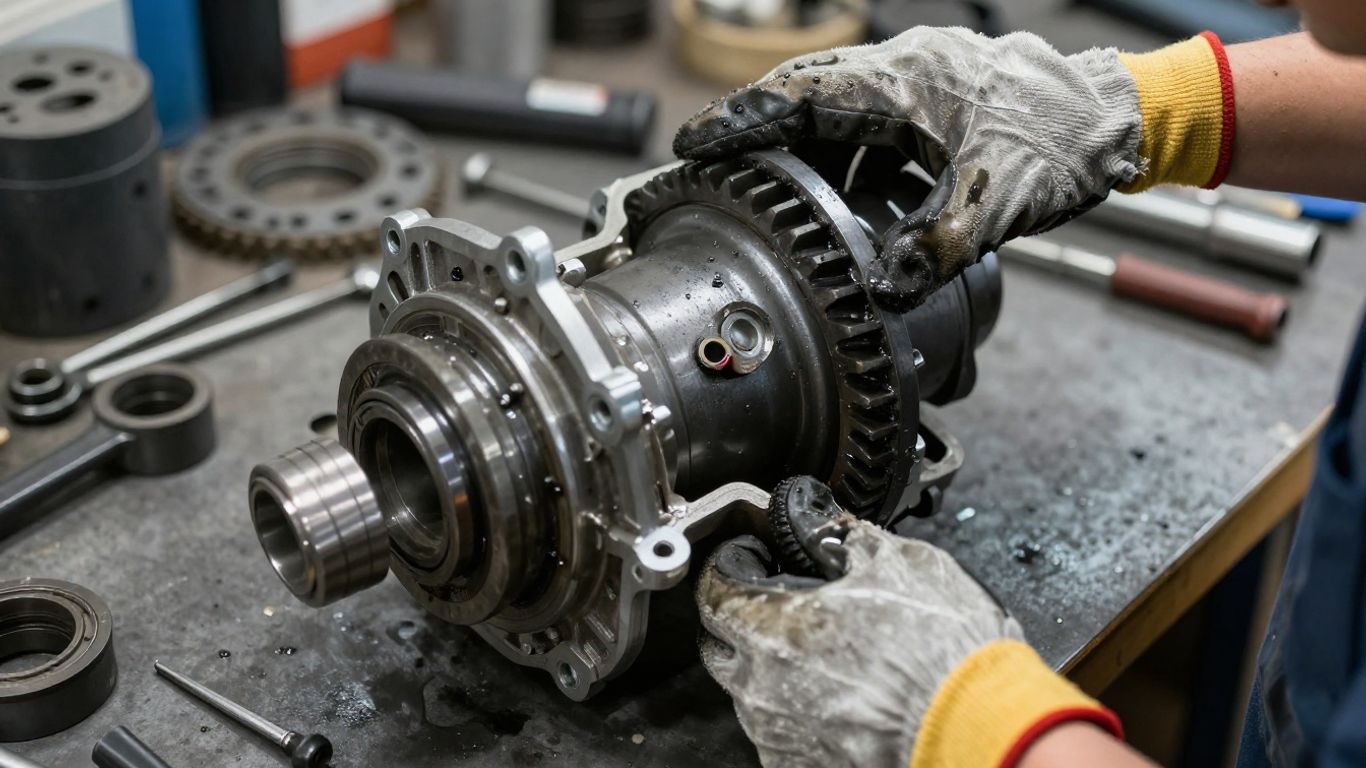
Look over the housing, cover, flanges, threaded holes, and mounting ears under good light. Fresh sealant, heavy dents, or scraped areas may indicate previous repair or impact. Check that the casing is not distorted and that drain and fill plugs can be removed without damage. A clean-looking exterior is useful, but it does not prove that the internal components are healthy.
Checking gears, bearings, seals, and mounting points
Rotate the input or output components where practical and listen for roughness, binding, or excessive play. Inspect the seals for leakage and ask whether the assembly was drained before storage. Bearings should not feel gritty, and mounting points should be straight and complete. A technician may need to perform a more detailed assessment, especially when the differential cannot be opened before purchase.
A useful inspection should leave you with answers about condition, source, and next steps rather than a simple visual impression.
A used driveline part is only good value when its condition and compatibility are understood.
Apply that principle to the seller’s description, photographs, testing notes, and return terms. If any of those pieces is missing, allow for greater risk in the price or choose a better-documented assembly.
Reviewing mileage and vehicle history
Ask for the donor vehicle’s approximate mileage, model details, accident history, and reason for dismantling. A differential removed from a lightly used vehicle may be attractive, but mileage alone cannot establish condition. Towing, poor lubrication, water exposure, and driveline faults may affect wear regardless of odometer reading. Treat history as supporting evidence, not as a guarantee.
Asking about testing and removal procedures
Find out whether the differential was tested while installed, inspected after removal, or simply sold as removed. Ask how it was drained, capped, labelled, and stored, since poor handling can introduce contamination or damage. Confirm which parts are included and whether a core exchange is required. These practical details can affect both installation time and the final cost.
Finding used Honda CR-V differentials in Ballarat
Searching for used Honda CR-V differentials Ballarat – genuine parts only is easier when the request is specific from the start. Provide the VIN, drivetrain, transmission, model year, and any original part number in your first enquiry. Local availability can change quickly, so a supplier may need to check recent dismantling stock or arrange delivery. Clear information helps avoid an unproductive trip to collect the wrong assembly.
Comparing local wreckers and specialist suppliers
Local wreckers may offer access to donor vehicles and used assemblies, while specialist suppliers may provide more detailed application checks or testing information. Compare the quality of the information rather than looking only at the headline price. Ask whether the part is genuine, whether it has been inspected, and how the seller handles a mismatch. A careful conversation before purchase often reveals more than a short online description.
Confirming stock for specific CR-V variants
When calling or emailing, describe the exact CR-V variant instead of asking for a general differential. Include the generation, build year, drivetrain, transmission, engine, VIN, and factory reference if available. Ask the seller to confirm the donor vehicle and the physical components included with the assembly. Written confirmation is especially useful when several variants share similar names.
Evaluating seller reputation and parts guarantees
Look for a clear business identity, consistent contact details, and a written description of testing and returns. A parts guarantee should explain its duration, exclusions, labour coverage, and requirements for reporting a fault. Ask whether the warranty applies to the complete differential or only selected internal parts. Strong after-sales support cannot make an incompatible unit suitable, but it can reduce uncertainty when the identification is correct.
Arranging pickup or delivery in the Ballarat area
Differentials are heavy, awkwardly shaped, and vulnerable to damage if they move around in transit. For pickup, bring suitable transport and check that the assembly is protected from dirt and impact. For delivery around Ballarat, confirm freight cost, packaging, dispatch timing, and whether the unit is drained and sealed. Photograph the package and part on arrival in case transport damage needs to be reported.
Understanding used differential pricing and value
Price comparisons only become meaningful when the assemblies have similar specifications and levels of evidence behind them. A low quote may exclude freight, seals, fluid, fitting, or testing, while a higher quote may include a guarantee and documented inspection. Consider the complete repair rather than the purchase price alone. That approach gives you a more realistic view of value.
Factors that affect the price of a used differential
Condition, mileage, rarity, demand, donor vehicle specification, and included hardware all influence price. A complete genuine assembly with known history may cost more than an unverified bare housing, but it may also reduce workshop time. Location and freight can matter as much as the initial listing. Ask for an itemised quote so hidden costs do not distort the comparison.
Comparing tested parts with unverified assemblies
A tested assembly offers more information about its likely condition than one sold without inspection, although no used part is risk-free. Testing notes should explain what was checked and whether the unit was assessed before or after removal. An unverified assembly may be appropriate for a specialist repair project, but its lower price should reflect the possibility of internal work. Choose according to your tolerance for uncertainty and downtime.
Calculating installation and fluid costs
Include technician labour, seals, gaskets, fasteners, approved fluid, cleaning, freight, and any related driveshaft or mount repairs. The old differential may also need to be removed, drained, and disposed of properly. Ask the workshop whether it recommends checking adjacent components before fitting the replacement. A written estimate makes it easier to compare a used unit with a rebuilt or replacement option.
When a rebuilt or replacement unit may be better value
A rebuilt unit can make sense when the available used assemblies have uncertain histories or visible wear. It may cost more initially, but new bearings, seals, or inspected gears can reduce the chance of repeating the repair. A replacement option may also be preferable when the original differential has severe damage or contamination. Discuss the likely service life, warranty, and total installed cost rather than choosing solely by purchase price.
Installing and protecting a replacement differential
Installation is the point where correct identification and careful buying must translate into dependable operation. The replacement should be compared with the original before fitting, including mounting points, flanges, sensors, and part markings. Any discrepancy should be resolved before the old unit is removed or the new one is filled with fluid. Good installation practice also protects the warranty and reduces avoidable follow-up work.
Having the differential fitted by a qualified technician
A qualified technician can confirm the diagnosis, support the assembly safely, set fasteners correctly, and inspect related driveline components. Differential work may involve heavy parts, restricted access, and procedures that vary by vehicle configuration. Ask the workshop to record the part number and any visible condition issues during installation. Professional fitting is particularly valuable when the used unit has limited service history.
Using the correct Honda-approved fluid
Use the fluid specified for the exact CR-V differential and follow the correct filling procedure. Differentials can have particular lubrication requirements, and using an unsuitable fluid may contribute to noise or wear. Confirm the product specification with the vehicle service information or qualified technician rather than relying on a generic gear-oil assumption. Check for leaks after the first drive and again during the initial service inspection.
Checking driveline alignment and associated components
Before finalising the repair, inspect driveshafts, axles, CV joints, mounts, seals, and nearby transmission components. Worn surrounding parts can create symptoms that remain after the differential is replaced. The technician should also check alignment, fastener security, fluid level, and abnormal noise during a road test. A short follow-up inspection can catch seepage or vibration before it becomes a larger fault.
Understanding warranties, returns, and after-sales support
Read the warranty and return conditions before installation, since some sellers require professional fitting or specific evidence of failure. Keep the invoice, VIN confirmation, photographs, and workshop report together. Ask who pays freight and labour if the assembly is faulty or incorrectly supplied. Clear records make a genuine problem easier to resolve and help distinguish a defective part from an unrelated driveline issue.
Conclusion
Buying a used Honda CR-V differential in Ballarat becomes far less risky when the search begins with exact vehicle identification and ends with professional inspection and installation. Confirm the genuine part reference, examine the assembly’s condition, compare the full repair cost, and choose a seller willing to stand behind the information supplied. That measured process is more likely to deliver a compatible differential and a reliable repair.