
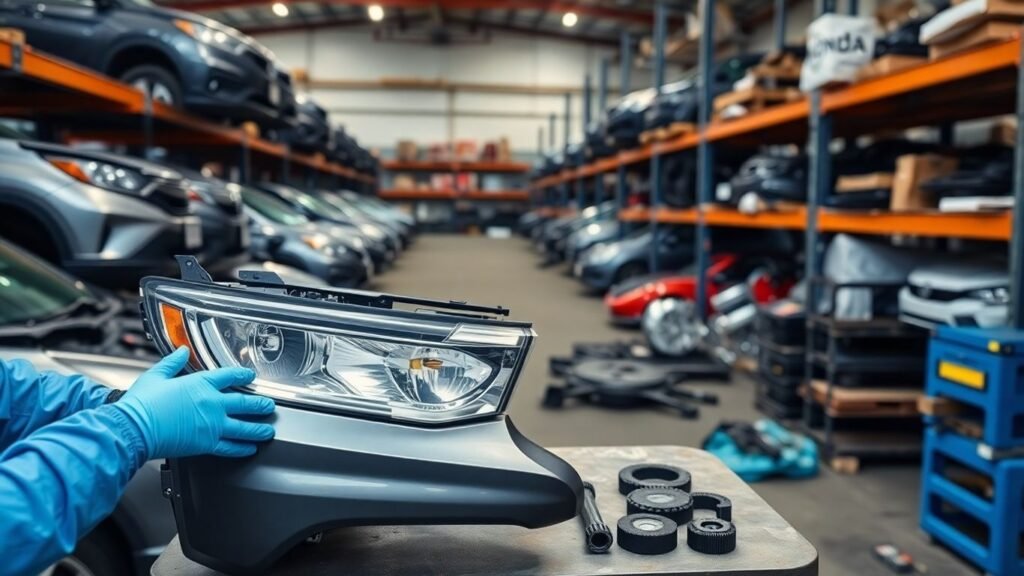
Looking to fix up your Honda CRV but don’t want to pay dealership prices for new parts? You’re in luck! Finding good used parts from Honda CRV wreckers can save you a ton of money. But how do you actually find the good ones and not end up with junk? It’s not always straightforward, so let’s break down how to find quality Honda CRV wreckers for your next repair.
Key Takeaways
- Reputable Honda CRV wreckers will have a good stock of engines, transmissions, and body panels. They should also provide details about where the parts came from and if they are original equipment manufacturer (OEM) parts.
- To find trustworthy wreckers, check their certifications, online reviews, and customer feedback. Understand their warranty terms and how they handle claims before you buy.
- Make sure the parts you buy will fit your specific CRV. Use your car’s VIN and the part number to confirm compatibility, and double-check against trim levels and model years.
- When buying, get quotes from a few different places and compare prices. Know all the extra costs like taxes, shipping, and any core charges, and always check their return policy.
- Buying used parts from Honda CRV wreckers is good for the environment because it cuts down on waste. Just be aware of any rules about handling fluids and making sure you have the right paperwork for major components.
What To Expect From Reputable Honda CRV Wreckers
Inventory Coverage For Engines, Transmissions, And Panels
A good yard doesn’t just say “engine available” and call it a day. You’ll see specific CR-V engine codes listed, like K24 and R20A for older models, 1.5T variants on later years, and hybrid power units when they have them. Transmissions should be labeled by type and year range, with notes on AWD compatibility, rear differentials, and transfer cases. Panels aren’t just “doors” either; better yards tag color codes, paint condition, rust notes, and whether sensors, mirrors, and glass are included. It sounds picky, but those details save hours.
When they test, they don’t hide it. Engines get hot-run videos or compression numbers with temps noted. CVTs and automatics come with shift reports, pan inspections, and fluid condition notes. Panels get graded for dents and scrapes, and they’ll tell you if a crease hides under trim. It’s not glamorous work, but you can quickly spot who actually checked the part and who dragged it out of the mud.
| Component | Typical checks | Mileage window | Common warranty |
|---|---|---|---|
| Engine | Hot-run, compression 170–210 psi, leakdown or borescope | 60k–150k | 90–180 days |
| Transmission/CVT | Road test when possible, pan debris check, fluid color/odor | 60k–130k | 90–180 days |
| Body panels | Grade A/B/C, rust and crease notes, paint code | n/a | 30–90 days |
OEM Components With Verified Donor Histories
You’re buying used, but it should still be authentic. Look for OEM stamps and complete part numbers, not mystery aftermarket bits tossed in a bin. Reputable wreckers can show the donor VIN, build date, and trim so you know if the part came from an EX-L with Honda Sensing or a base model without the same sensors. That matters for modules, mirrors, grilles, and anything with hidden brackets or radar.
Records should show where the damage was on the donor. If the hit was at the rear, a front subframe and suspension parts make more sense. If there was any flood risk, they’ll say it, or they won’t sell electronics off that car. Hollander interchange numbers or equivalent references are a good sign because they tie your request to known fitments, not guesses. Immobilizer and PCM swaps often call for reprogramming, and the seller should warn you about that up front so you’re not stuck at the shop.
Ask for the donor VIN and printed test results before you pay.
Flexible Pickup, Shipping, And Core Handling
The logistics can be the annoying part, but a solid yard keeps it simple. Local buyers usually get same-day pickup after parts are pulled and capped. For freight, engines and transmissions ship on strapped pallets with fluids drained and ports plugged, and you’ll see size and weight listed so you can plan a liftgate if you’re shipping to a house. Shipping quotes should break out residential and fuel surcharges so the total doesn’t jump at the last minute.
Cores are not a trap if expectations are clear. You pay the core up front, then get it back when your old part returns within the time limit—often 30 to 45 days—cleaned of excess fluids and complete enough to rebuild. Keep the crate and caps from the delivery and send the core back the same way. If a yard supplies a return label, they’ll usually want photos at pickup to confirm condition, which protects both sides.
Before you order, get the full out-the-door number with shipping, liftgate or residential fees, and the core return deadline in writing so nothing gets lost in the shuffle.
How To Vet Honda CRV Wreckers For True Quality
A little homework saves time, cash, and stress. A good wrecker is transparent, traceable, and responsive. You want proof, not promises.
Ask for the donor VIN, mileage, and written test results. If that’s a problem, move on.
Checking Certifications, Ratings, And Customer Reviews
Look for industry credentials like ARA Gold Seal and ISO standards, plus active membership in recognized recycler groups. Real customer feedback matters more than star counts; read how the seller handled a bad part or a shipping hiccup. You want clear business info, a working phone line, and someone who answers questions without ducking the details. Ask for a sample invoice that shows warranty terms, taxes, and any core conditions. A seller that shares inventory screenshots, bench-test notes, or yard photos usually runs a tighter ship than one that just says “tested good.”
Understanding Warranty Length And Claim Process
Warranty terms should be in writing and easy to follow. Parts-only coverage is common, but some sellers offer limited labor caps on engines and transmissions if you follow install rules and keep receipts. Pay attention to claim windows, who pays return freight, and any restocking fees. The table below gives ballpark ranges you can use to compare sellers side by side.
| Item | Typical Range | What To Check |
|---|---|---|
| Engine warranty | 90–180 days parts-only; some offer 6–12 months | Labor cap rules, required proof of install, fluids used |
| Transmission warranty | 90–180 days parts-only; optional 6–12 months | Cooler flush proof, scan reports, shift adapt reset notes |
| Claim timeline | 2–7 business days to approve/deny | Who pays return shipping, inspection steps |
| Restocking fee | 0–25% if buyer error | Written exceptions for mispick or bad part |
| Core policy | Return within 14–30 days | Credit amount, condition of core, shipping method |
Inspecting Photos, Test Reports, And Part Condition Grades
Clear, recent photos should show part numbers, casting marks, sensor ports, and any damage with close-ups. Good engine files include compression or leak-down numbers, hot idle oil pressure, and a short run video; for transmissions, look for pan inspection notes, fluid color, and scan data with no TCM codes. For electronics, matching ID numbers and notes on immobilizer pairing save headaches later. Ask how they grade parts: body panels often use A/B/C with dent counts and scratch size; mechanical parts should list mileage and any known wear. If the seller can’t explain their grading or won’t share test sheets, your risk goes way up.
Ensuring Perfect Fitment For Your CRV Replacement Parts
Nothing drags out a repair like a part that almost fits. You lose daylight, the car sits apart, and shipping feels like it took your lunch money. A tight match starts with data, not guesses, and a quick chat with the wrecker to confirm the details you can’t see from photos.
Fitment mistakes cost more time than the part itself, so slow down and double-check the identifiers.
Using VIN And Part Numbers To Confirm Compatibility
Your 17‑digit VIN isn’t just a serial; it tells year, plant, body, engine family, and more once decoded in a Honda catalog. Ask the yard to run your VIN in their system and to read the full OEM number printed or cast on the donor part. Honda numbers often carry revisions and supersessions, so that last suffix matters on sensors, ECUs, and pumps. If their listing shows a superseded part, ask whether it’s a direct replacement or a different design that needs an updated bracket or flash. Modules and CVT components can be picky—same connectors don’t always mean the same calibration. Compare labels, barcodes, and tag IDs, not just “looks the same” photos. Always match the VIN and OEM part number before you pay.
Cross-Referencing Trims, Drivetrains, And Model Years
Trim badges can trick you. LX, EX, and Touring often share panels and glass, but brakes, infotainment, and harnesses can change by trim. FWD versus AWD affects subframes, axles, rear hubs, and even exhaust routing. Mid-cycle changes split what should be a simple swap: the 2012–2014 CR‑V uses a 5‑speed automatic, while 2015–2016 moved to a CVT, and that break matters for mounts, TCM logic, and coolers. Later years brought new engines and electronics, which narrows interchange even more. When in doubt, use the generation as a starting point, then pin it down with engine code and transmission type.
| Model years | Engine (US) | Transmission | Notes on swaps |
|---|---|---|---|
| 2012–2014 | 2.4L K‑series | 5‑speed auto | Most 12–14 drivetrain parts stay within 12–14; CVT pieces won’t carry over |
| 2015–2016 | 2.4L Earth Dreams | CVT | 15–16 pair well with each other; don’t mix with 12–14 drivetrain parts |
| 2017–2019 | 2.4L (LX) or 1.5T | CVT | Split by engine; mounts, exhaust, and ECUs differ between 2.4L and 1.5T |
| 2020–2022 | 1.5T | CVT | Many shared hard parts with 17–19 1.5T, but electronics and ADAS updates require part‑number checks |
| 2023–2025 | 1.5T, 2.0L hybrid | CVT/eCVT | New generation; do not mix with 17–22 for drivetrain or modules |
Interchange Databases And Yard Lookup Best Practices
Use yard tools to back up your notes. Hollander Interchange numbers, Car‑Part.com filters, and recycler grading help spot parts that actually swap. Ask for the donor VIN, stock tag, mileage, and test results when it’s a big-ticket item like an engine, CVT, or differential. Photos should show casting numbers, connector shapes, and mounting ears, not just a wide shot. For modules, get the exact part number and software ID; some need immobilizer pairing or a post-install relearn. If you’re buying ADAS‑related parts—front cameras, radar units, or a bumper with brackets—plan on calibration after install, because that’s part of fitment too. A few extra messages with the wrecker can save a weekend of frustration.
Smart Buying Strategies From Honda CRV Wreckers

Slow down, verify the part details, and you’ll save real money while avoiding headaches later.
Requesting Quotes And Negotiating Fair Pricing
Ask for written quotes, not just a quick number over the phone. You want the OEM part number, donor VIN or stock ID, mileage, part grade, warranty term, and exactly what’s included. If it’s a drivetrain piece, ask for test results: compression for engines, pressure or stall test notes for transmissions. Photos matter, especially connector ends and mounting points. A clear quote with real data is your best protection if something shows up different.
Negotiation works when you can show a competing price or are willing to pick up the part. If a yard hears you’re ready to pay today for a confirmed match, the number often moves. Ask for a price with shipping and a price for local pickup, then compare. If you’re buying more than one item, push for a package deal. Sometimes the discount isn’t obvious until you ask for it directly.
Save the salesperson’s name and direct line. When you call back informed, the tone shifts and the deal usually gets better.
Understanding Core Charges, Taxes, And Shipping Costs
A core charge is a deposit that you get back when the old part returns in rebuildable shape. Confirm the return window and what counts as acceptable: no cracked housings, no opened cases, fluid drained, and the same assembly you bought. Map out the return right away so you don’t miss the deadline. Snap a few photos of the core before shipping back, just in case.
Shipping cost depends on size and distance. Small items go parcel and arrive fast. Engines and transmissions ride freight, which can add residential and liftgate fees. Terminal pickup can cut the bill and speed things up. Taxes vary by state and how the sale is processed, so ask the yard to show tax as a separate line.
| Line Item | Example Amount |
|---|---|
| Part Price (used transmission) | $650 |
| Core Deposit (refundable) | $250 |
| Freight (terminal pickup) | $190 |
| Sales Tax (est. 8% on part+core) | $72 |
| Upfront Total | $1,162 |
| Net After Core Refund | $912 |
Verifying Return Policies For Incorrect Or Defective Parts
Read the policy like you would a rental car contract. Note the return window, restocking fees, and who pays shipping. A wrong-color door might return fine, but an ECU that was plugged in could be “no return” unless tested defective. Many yards require the part to be unmodified, in the same condition, with tags and paint marks intact. Keep the box and packing until you know you’re keeping the part.
For defective claims, most yards want photos, a quick note from the installer, and the original invoice number. Some ask for diagnostic codes or a bench test result. If a freight item arrives damaged, mark the bill of lading before the driver leaves and take pictures on the spot. That single step can decide whether you get a fast replacement or a long dispute.
Environmental And Legal Considerations When Sourcing Recycled CRV Parts
How Auto Recycling Reduces Waste And Emissions
Buying a take-off engine, transmission, or a straight door from a reputable yard keeps heavy metal out of the shredder and avoids the energy that goes into casting, machining, stamping, and shipping a brand-new part. The footprint isn’t only about steel and aluminum. Paint curing, heat-treating, and packaging all add up. Local pickup can trim transport emissions too, which is a small win that feels good when you load the part in the back and head home.
| Component | Approx. CO2e avoided vs. new (kg) | Quick note |
|---|---|---|
| Engine (complete take-out) | 200–500 | Major casting and machining steps skipped |
| Transmission (AT/CVT) | 150–400 | Less new steel and precision machining |
| Door or hood panel | 10–40 | Stamping and paint energy reduced |
These are broad life-cycle ranges. Repainting and long-distance freight can eat into the savings, but reuse still tends to win by a wide margin.
Always buy from yards that can show how parts were sourced, drained, and documented.
Fluid Handling And Hazardous Material Compliance
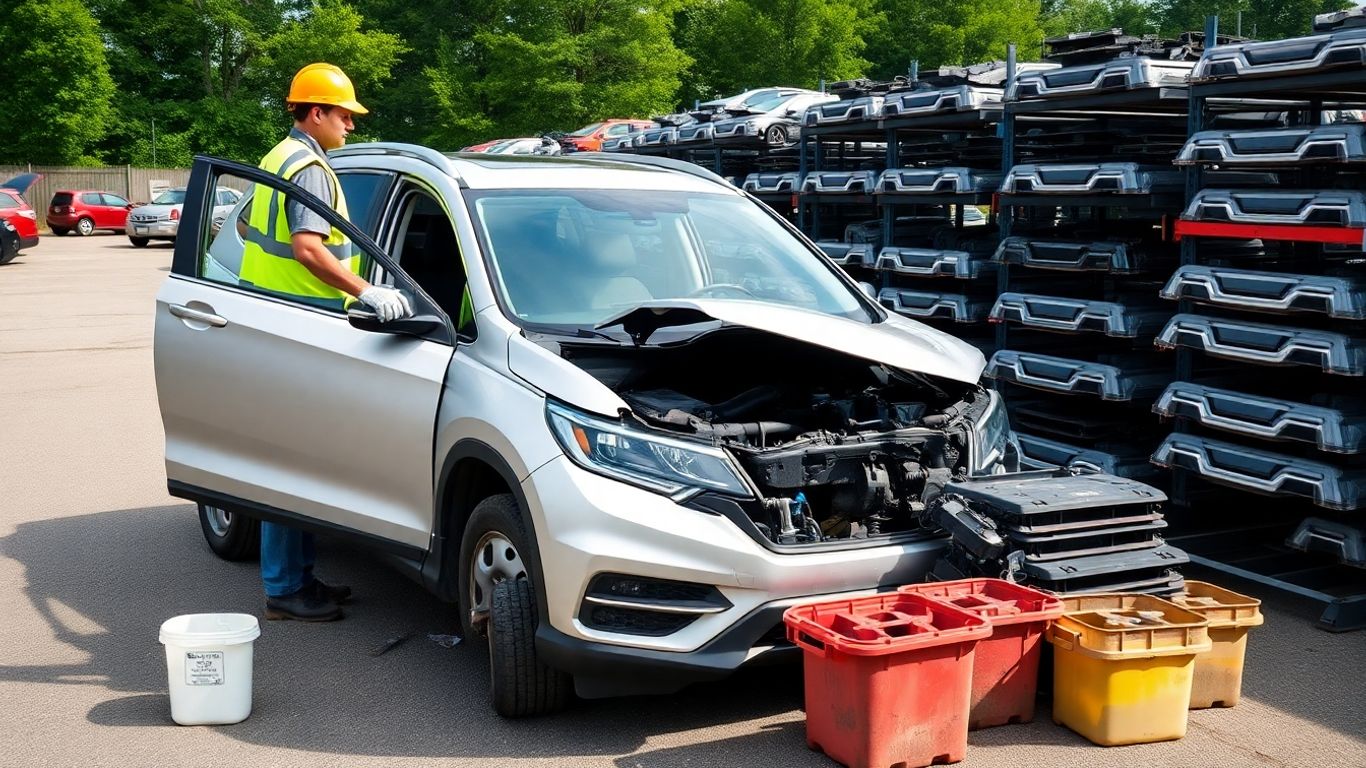
Engines and gearboxes arrive at the yard full of oil, ATF, and coolant. Good operators depollute vehicles on a concrete pad, capture every fluid in labeled containers, and keep spill kits within arm’s reach. Refrigerant recovery on CRV A/C systems should be done with certified equipment, not cracked open to the air. Brake fluid, power steering fluid, and even washer solvent get stored and shipped with manifests so nothing ends up in a storm drain. Batteries and airbags are a different story: the battery is hazardous if mishandled, and inflators are regulated because they’re pyrotechnic. If you’re looking at a CRV Hybrid pack, ask how they store and ship high-voltage units, and confirm it’s not damaged or waterlogged. A quick question to the counter person about their fluid plan tells you a lot about the yard’s standards.
If a seller can’t explain how they capture fluids and handle airbags or batteries, you’re the one taking the risk later.
Title And Documentation Requirements For Major Components
Paperwork isn’t exciting, but it protects you. Engines and transmissions should come with the donor VIN on the invoice, the mileage claimed, and the part’s ID tag or serial where possible. Frames, unibodies, and front clips often trigger title or proof-of-ownership rules, and some states require extra forms for anything that looks like the vehicle’s identity. Catalytic converters are tightly controlled; in many places, used units can’t be sold unless they meet specific certification rules, so don’t be shocked if a yard refuses to sell one. Keep every receipt, warranty card, and any test report with the VIN attached. If your state does emissions or safety checks, you may be asked to show where the part came from and that it wasn’t stolen. A clean paper trail makes registration, inspections, and future resale much easier.
Installation Guidance And Post-Purchase Support
Coordinating With Local Mechanics For Proper Installation
Get your shop on the same page before the part arrives. Share your CRV’s VIN, the donor VIN if available, mileage on the donor, and any test sheets from the wrecker. Ask the mechanic to schedule bay time, confirm needed consumables, and plan for common extras like cooler flushing, gasket replacement, and programming. Always prime the oil system before the first start. A quick call to confirm torque converter seating on automatics, sensor swaps, and whether the ECU or immobilizer needs set-up can save you from a long weekend of headaches.
Protecting Warranties With Approved Fluids And Procedures
Use what Honda calls for, not what’s on sale. That means 0W-20 engine oil on most late-model years, ATF DW-1 for traditional automatics, HCF-2 for CVT units, Type 2 coolant, and Dual Pump Fluid for the rear diff on AWD trims. Keep every receipt, snap photos of serial tags, and log mileage at install and at the first week checkup. If the yard requires cooler replacement or a documented flush, write it down and keep the invoice. Skipping one small step is the fastest way to have a claim kicked back.
| Part Type | Typical Warranty Range (days) | Install Proof Often Required | Common Exclusions |
|---|---|---|---|
| Engine (long block) | 90–180 | Oil type/quantity, priming, cooler cleaning, photos | Overheating, running without oil, tuning mods |
| Automatic/CVT Transmission | 60–180 | Cooler replacement/flush, fill spec, relearn screenshots | Burnt fluid, towing misuse, wrong ATF |
| Differential/Transfer Case | 30–90 | Correct fluid, seal replacement | Contamination, off-road impact damage |
| Electronics (ECU/TCM/Sensors) | 30–90 | Programming proof, no water damage | Incorrect coding, shorted wiring |
Break-In, Calibration, And After-Sale Support Channels
Go easy at first. Keep RPM and load moderate for a few hundred miles, vary speed, and change the oil early if the yard recommends it. Transmissions often need relearn cycles after battery disconnect or module swaps; let the car complete idle and drive routines without hard throttle. If you replaced steering or suspension parts, ask for an alignment and reset the steering angle sensor. When modules are swapped, confirm keys and immobilizer sync, and check for ADAS calibration needs if you touched sensors behind the grille or windshield.
If something feels rough, shifts oddly, or temps creep up, pull over, document it, and call the wrecker and your mechanic the same day—small problems become big ones fast.
Wrapping It Up
So, finding the right place for your Honda CRV parts doesn’t have to be a headache. Whether you’re looking for used parts to save some cash or need specific components for a repair, knowing where to look makes all the difference. Remember to check out wreckers that specialize in Hondas, as they’ll likely have the best selection for your CRV. It might take a little digging, but getting the right part from a reputable wrecker can save you a lot of time and money compared to buying new. Happy hunting for those parts!